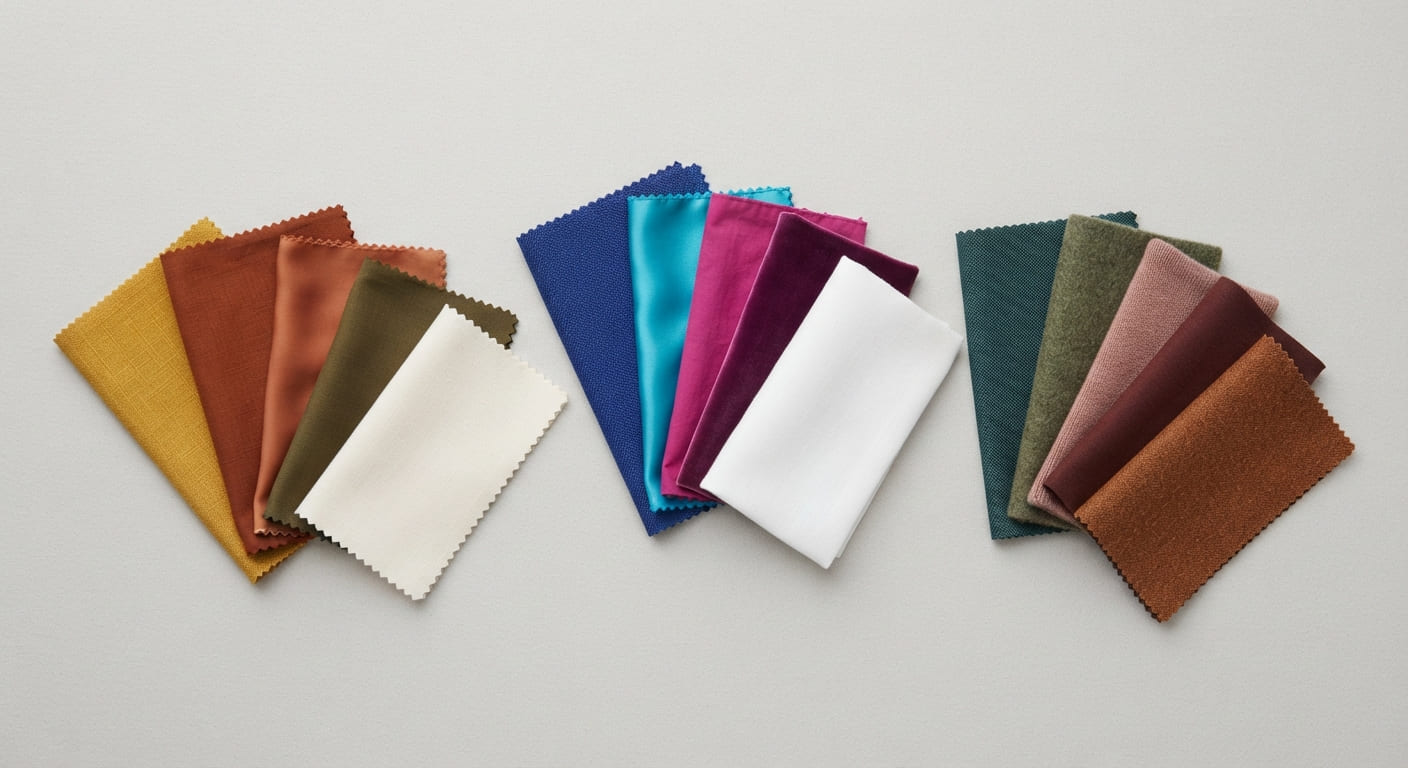
The right shalwar kameez colours for Pakistani skin tones are decided by three things — your undertone, your depth, and your contrast. Not by whether you are "fair" or "dark."
Most colour guides online were written for pale European skin and then reused for us. That is why they keep telling you to wear pastels that make you look tired.
This guide is built for brown skin. Read it once and you will never buy a dull suit again.
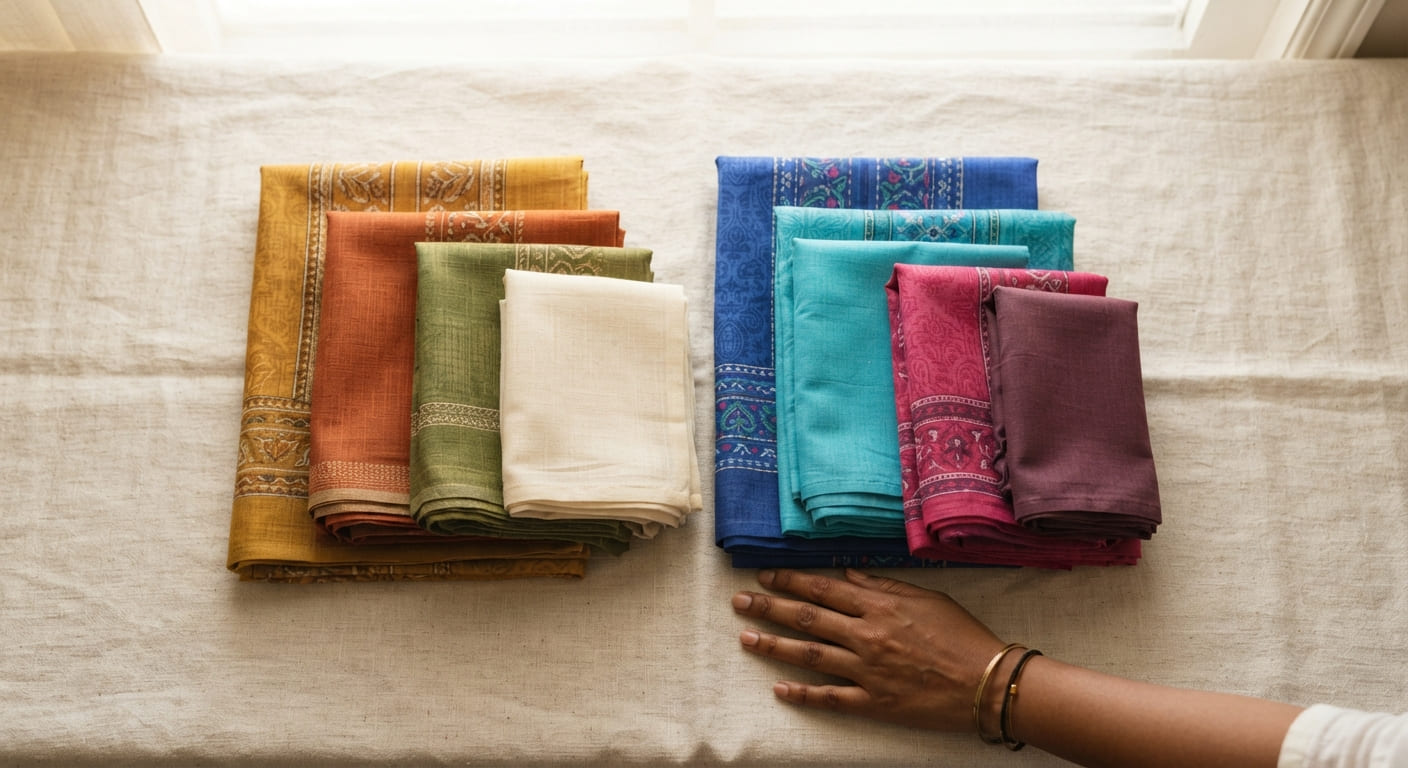
First, a 60-Second Undertone Test
Undertone is the colour underneath your skin. It never changes, even when you tan.
Do these three checks in daylight, near a window. No makeup. No filter.
Test 1 — Gold vs Silver
Hold a gold bangle on one wrist and a silver one on the other. Look at which one makes your skin glow and which one looks flat.
Gold wins → warm undertone
Silver wins → cool undertone
Both look fine → neutral or olive undertone
Test 2 — White vs Cream
Drape a pure white dupatta under your chin. Then swap it for an off-white or cream one.
Pure white flattering you means cool. Cream flattering you means warm. This test is more reliable than anything else on this list.
Test 3 — The Vein Check (and why it often fails)
Look at the veins inside your wrist. Blue or purple suggests cool. Green suggests warm.
Honest warning: on medium and deep brown skin this test is weak. More melanin sits above the veins, so almost everything reads greenish. If Test 3 disagrees with Test 1 and 2, trust Test 1 and 2.
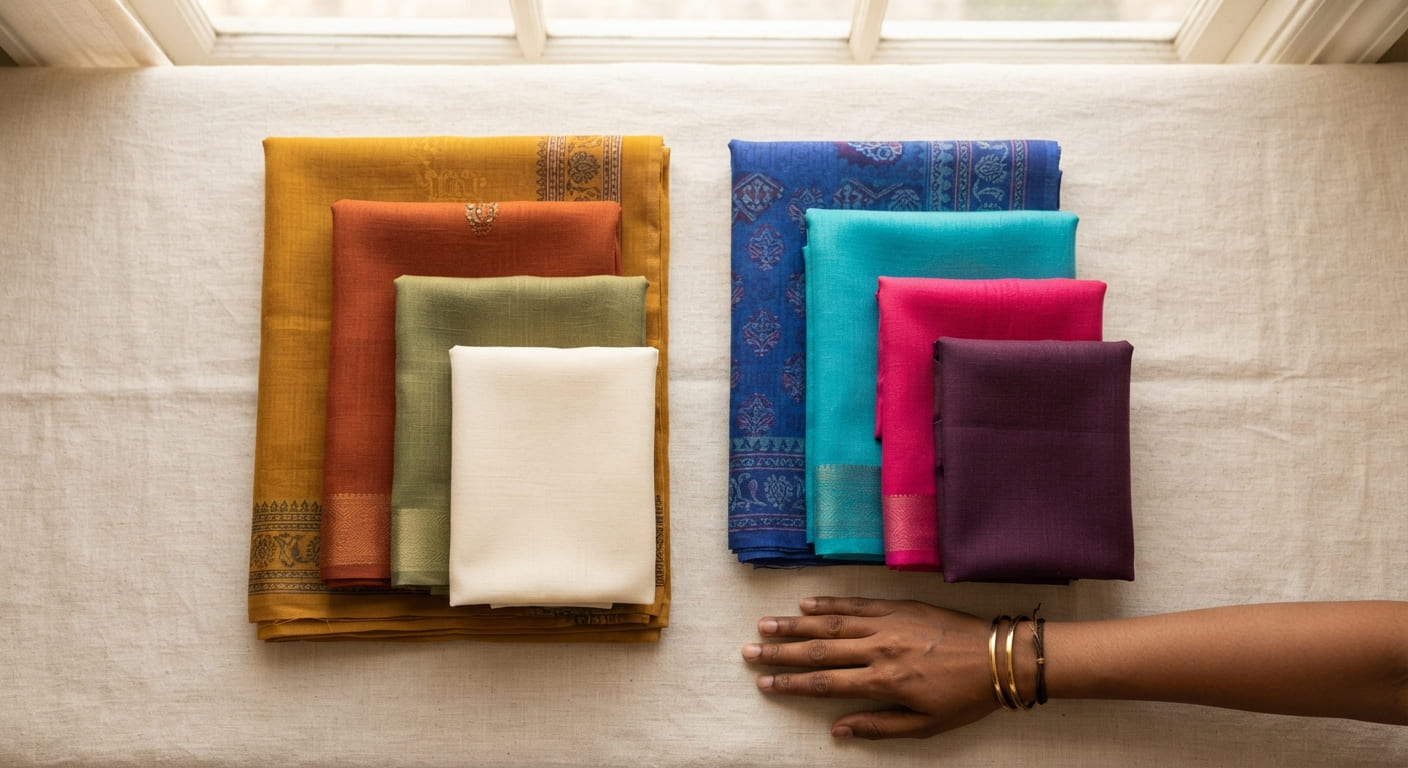
Why "Fair vs Dark" Is the Wrong Question
Pakistani shopping culture sorts everything into gora and saanwla. That split is useless for choosing colour.
Two women with the same depth of skin can suit completely opposite palettes, because their undertones differ. Depth tells you nothing on its own.
Even the medical world has admitted its own scale is limited here. The Fitzpatrick scale, which ranks skin from Type I to Type VI, was created in the 1970s to dose UV light for psoriasis treatment — not to describe brown skin. Dermatologists have since published that it does not properly represent skin of colour at all.
Reference: Goon P, Banfield C, Bello O, Levell NJ. "Skin cancers in skin types IV–VI: does the Fitzpatrick scale give a false sense of security?" Clinical and Experimental Dermatology, Wiley, 2021.
So we stopped using it. Riwayat sorts colour by undertone, depth and contrast instead. Here is how each layer works.
Layer 1 — Undertone Picks the Colour Family
This is the biggest single decision. Get it right and half your wardrobe improves overnight.
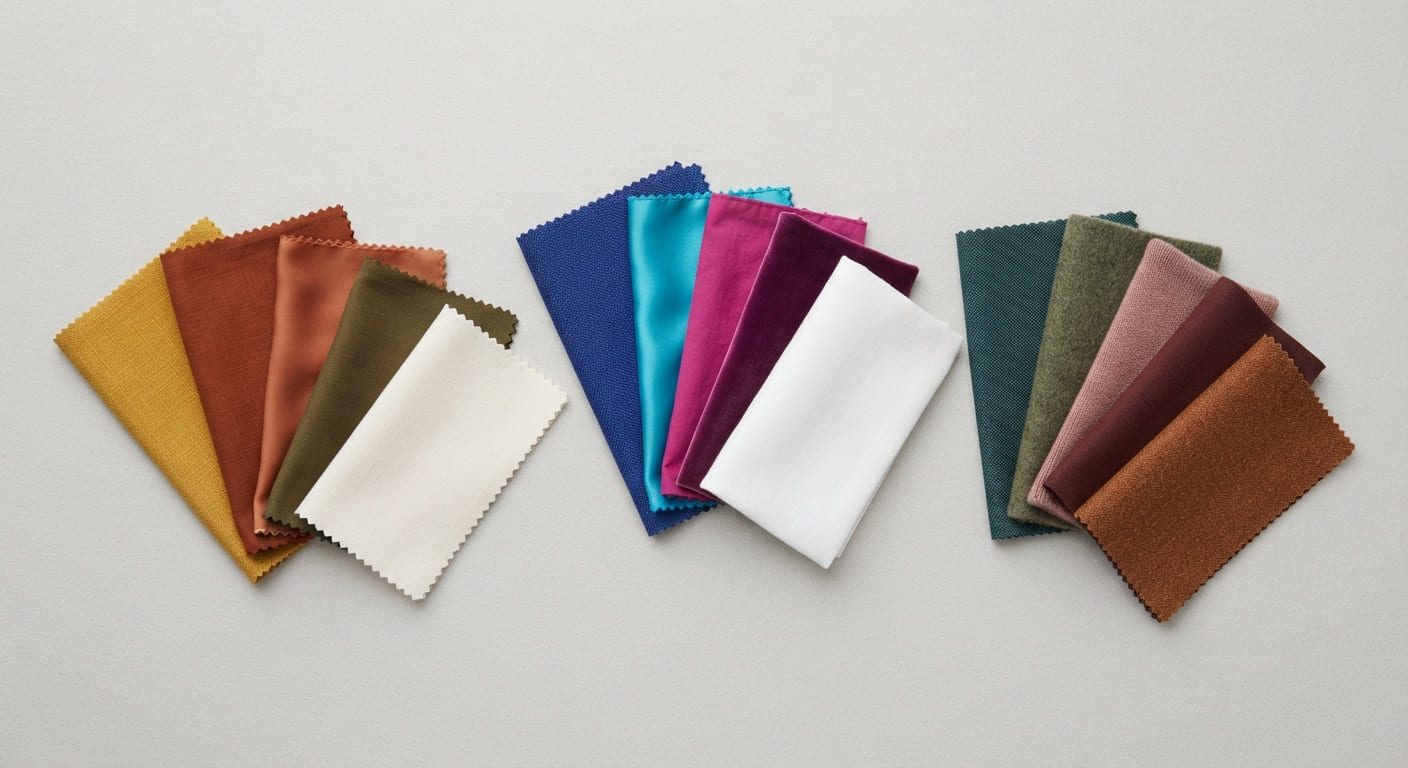
Warm undertone (golden, olive-gold, honey)
This is the most common undertone across Pakistan. Your skin has a yellow or golden base and gold jewellery sits beautifully on you.
Wear: mustard (sarson), rust, terracotta, mehndi green, bottle green, deep coral, brick red, maroon, camel, ivory, champagne, warm teal, aubergine, chocolate brown.
Skip: icy pastels, cold grey-blue, pure stark white, dusty lavender.
Cool undertone (pink, rosy, blue base)
Less common here, but very real — often seen in Kashmiri, Hazara and northern families. Silver jewellery looks sharp on you.
Wear: royal blue, firozi (turquoise), rani pink, magenta, jamun (plum), emerald, wine, pure white, charcoal, powder blue, silver-toned greys.
Skip: mustard, orange-based rust, warm khaki, golden beige.
Neutral / olive undertone
Olive is very common in South Asian skin and it is not the same as warm. Olive has a faint green cast that makes yellow-based colours look muddy on you.
Wear: teal, moss green, dusty rose, burgundy, deep peach, warm navy, off-white, cinnamon, muted gold.
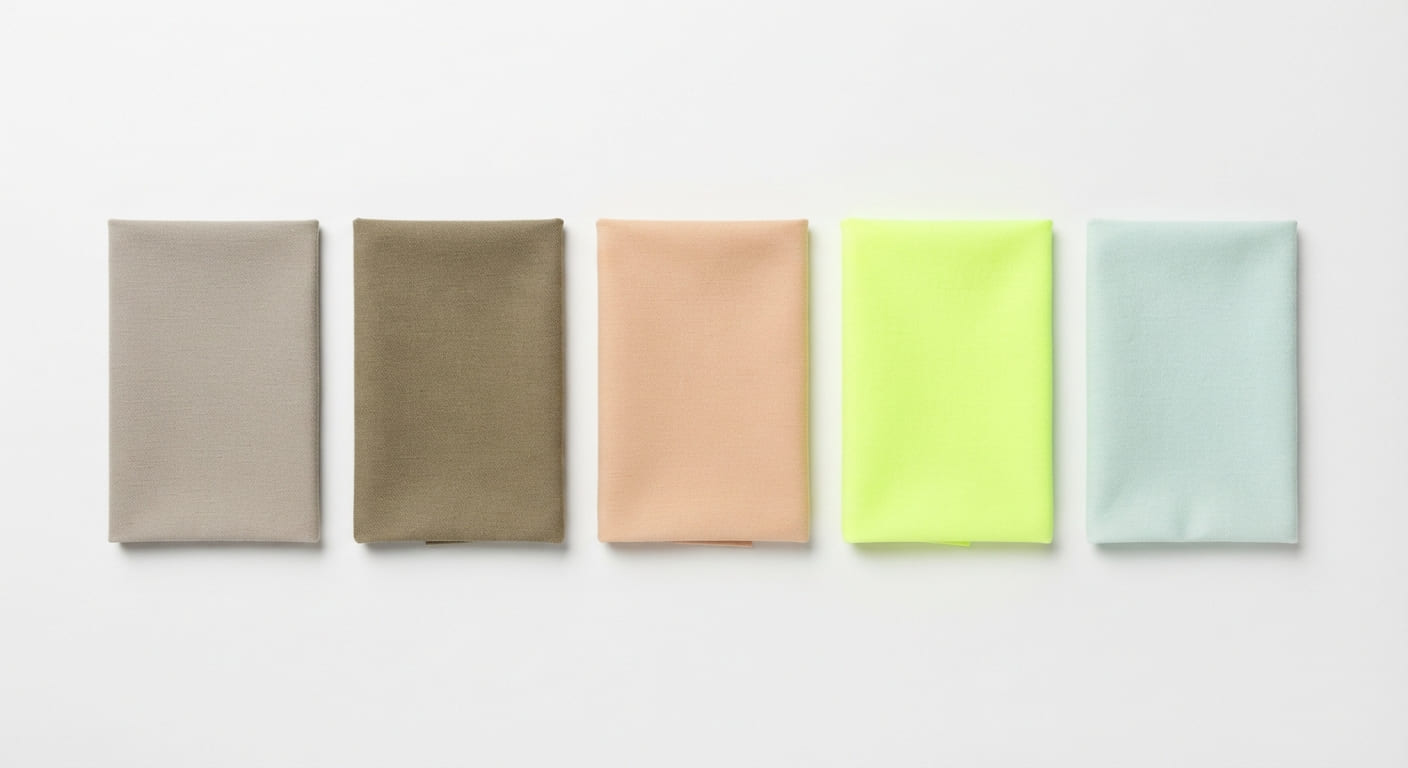
Skip: yellow-greens, neon lime, flat beige, anything the exact same tone as your skin.
Layer 2 — Depth Decides How Strong the Colour Goes
Depth means how light or deep your skin is. It does not change your colour family. It changes the intensity you can carry.
Light to medium brown
Mid-strength colours sit best. Very heavy blacks and inky navies can overpower you and pull attention to the fabric instead of your face.
Go for: dusty rose, teal, sage, brick, wine, tea pink.
Medium to deep brown
You can carry saturation that would swallow lighter skin. This is your advantage, so use it.
Go for: emerald, sapphire, rani pink, mustard, orange-rust, ivory, crisp white.
Deep brown
Rich and bright both work. What does not work is anything washed out or greyed down.
Go for: fuchsia, cobalt, gold, scarlet, bright white, jewel purple, pure black with strong zari.
The rule in one line: the deeper your skin, the more colour you can carry — and the worse dull, muddy shades look on you.
Layer 3 — Contrast Decides How Bold the Combination Goes
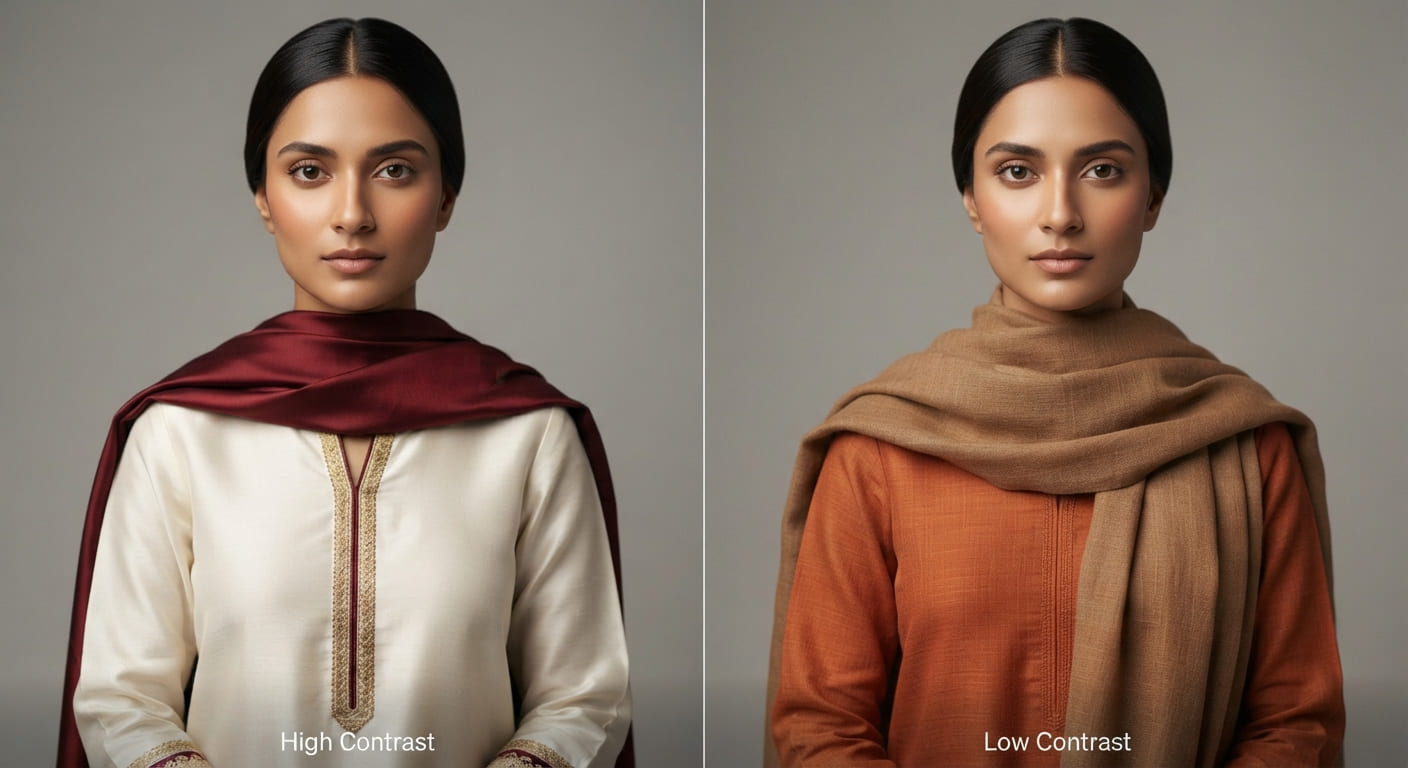
Contrast is the gap between your skin, your hair and your eyes. Nobody talks about this, and it is the reason two women with identical undertones suit different outfits.
High contrast — deep black hair against lighter skin. Bold pairings suit you: black and white, ivory and maroon, cobalt and gold.
Low contrast — hair, skin and eyes all sit close in tone. Blended, tonal outfits suit you better: rust with camel, teal with moss, plum with wine.
If a bold two-colour suit looks "loud" on you but great on your sister, contrast is the reason. Not the colour.
The Multiplier Everyone Misses: Fabric and Sheen
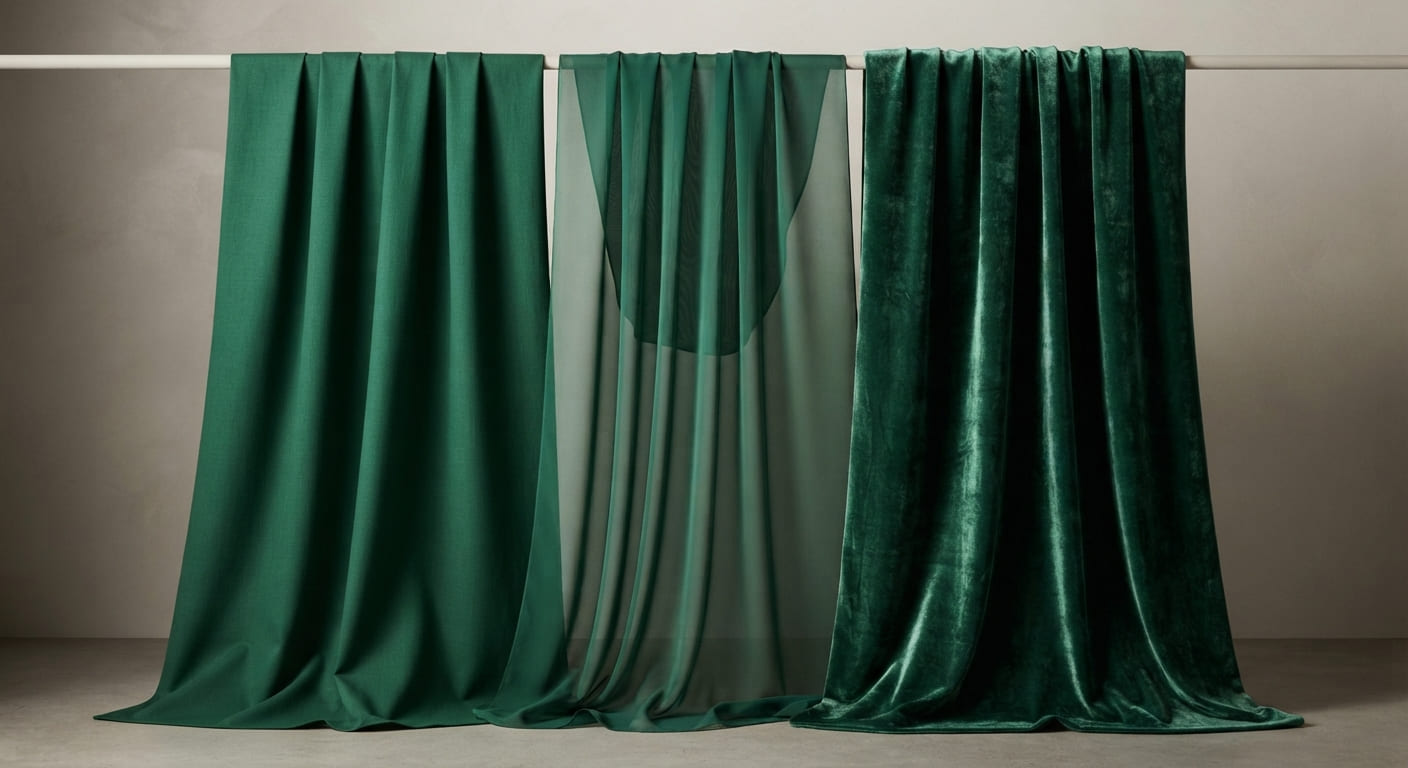
A colour is not one colour. It changes depending on what it is woven into.
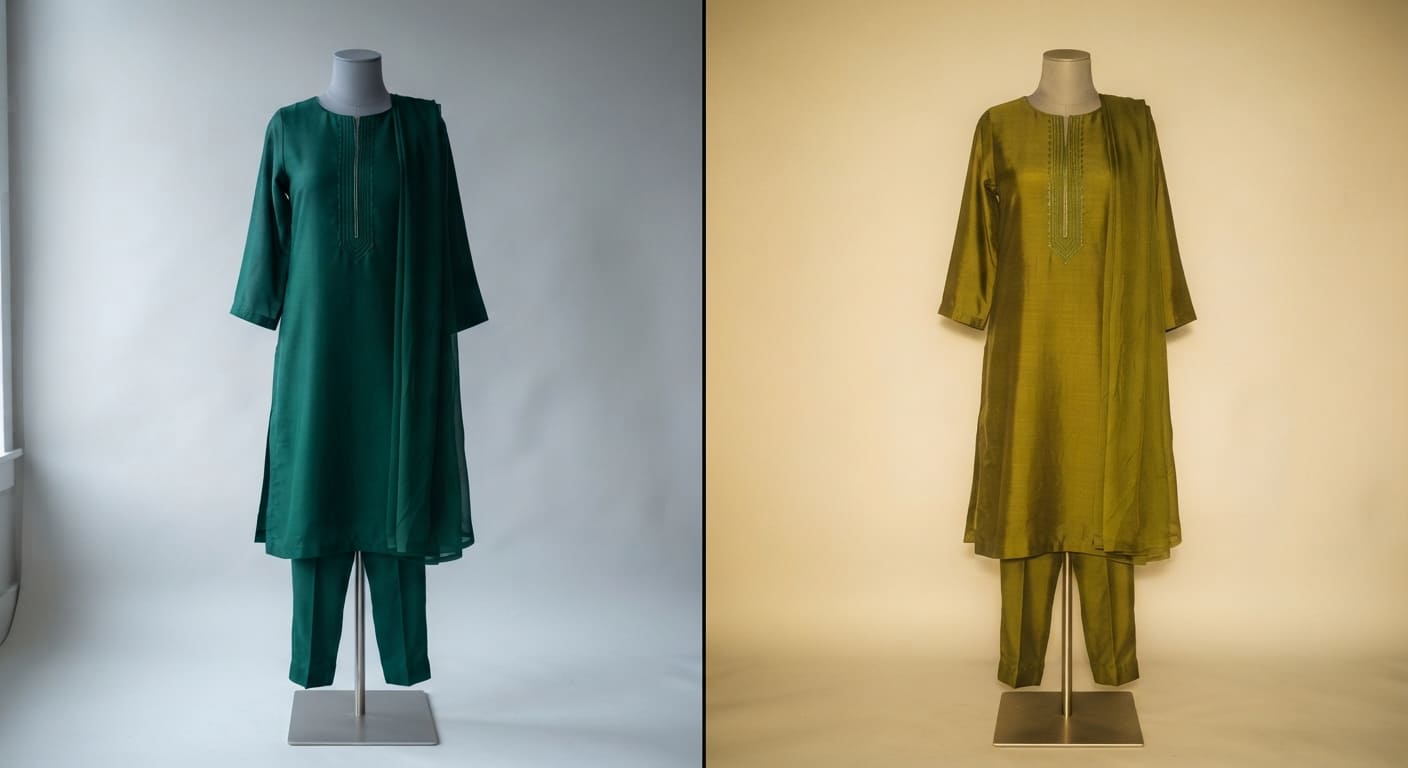
Chiffon and organza let light through, so shades read one step lighter and softer. A firozi chiffon is gentler than a firozi silk.
Velvet and jamawar absorb light and read deeper. Maroon velvet looks almost black in dim light — plan for that.
Lawn and cotton are matte, so colours read truest. What you see on the roll is what you get on the body.
Zari matters too. Gold zari pushes an outfit warm. Silver zari pushes it cool. A cool-undertone woman in a warm suit can rescue it with silver work, and the reverse also holds.
Colours That Fight Pakistani Skin (And the Easy Fix)
Flat grey-beige — drains the face, reads like wet cement. Fix: camel, cinnamon or warm stone.
Muddy khaki — fights olive undertones directly. Fix: moss or bottle green.
Nude the same tone as your skin — you disappear into the outfit. Fix: go two shades lighter or deeper.
Neon lime and acid yellow — casts a green shadow on the jaw. Fix: mustard or sarson.
Icy mint and baby blue — looks cold and ashy on warm skin. Fix: teal or firozi.
Pure stark white on warm skin — turns skin sallow. Fix: ivory or off-white.
The Neckline Rule — Only 20cm Actually Matters
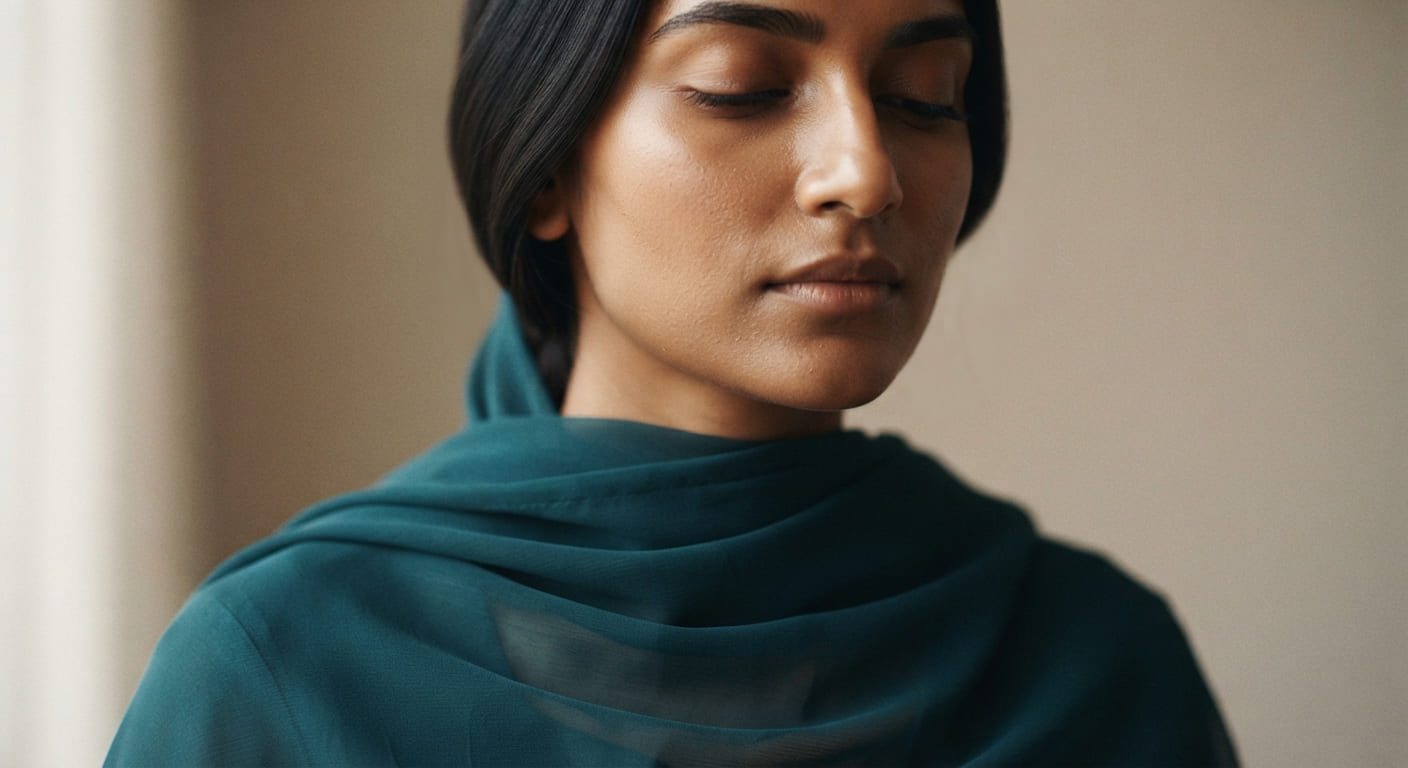
The colour that decides how you look is the colour touching your face. Nothing else is close.
So if you love a shade that does not love you back, do not throw it out. Move it away from your face.
Put the difficult colour on the shalwar or trousers
Keep a flattering colour at the neckline and dupatta
Use a contrast neckline patti or gala border as a buffer
This single trick saves more outfits than any other advice in this guide.
Wedding Lighting Changes Everything
Pakistani functions are lit with warm yellow banquet lights, then photographed with a hard white flash. Those two light sources fight each other.
Under yellow light: cool colours dull down. Powder blue, lilac and mint lose their life by the second hour.
Under flash: pale nudes, ivories and champagnes wash out completely. You will look faded in every photo while the outfit keeps its detail.
What survives both: jewel tones. Emerald, sapphire, rani pink, wine and deep teal hold their colour under yellow light and under flash.
If the event will be photographed, choose depth over pastel. Always.
Best Colours by Occasion
Office and daily wear
Muted versions of your family. Teal, wine, stone, moss, navy. Matte lawn or cambric keeps it professional.
Mehndi
Mehndi is the one function where bright wins. Warm undertones — mustard, orange, mehndi green. Cool undertones — rani pink, magenta, firozi.
Nikkah
Soft but not washed out. Warm — ivory, champagne, dusty peach. Cool — powder pink, pale blue, silver-toned white. Add heavy zari so the flash has something to catch.
Baraat and Walima (as a guest)
Deep and rich. Emerald, sapphire, plum, wine, bottle green. Avoid red on baraat and avoid white or ivory on walima — you do not want to clash with the bride.
Eid
Eid ul Fitr suits fresh and light shades. Eid ul Azha, falling in warmer months, works better with airy lawn in mid-tones.
Quick Cheat Sheet: Shalwar Kameez Colours for Pakistani Skin Tones
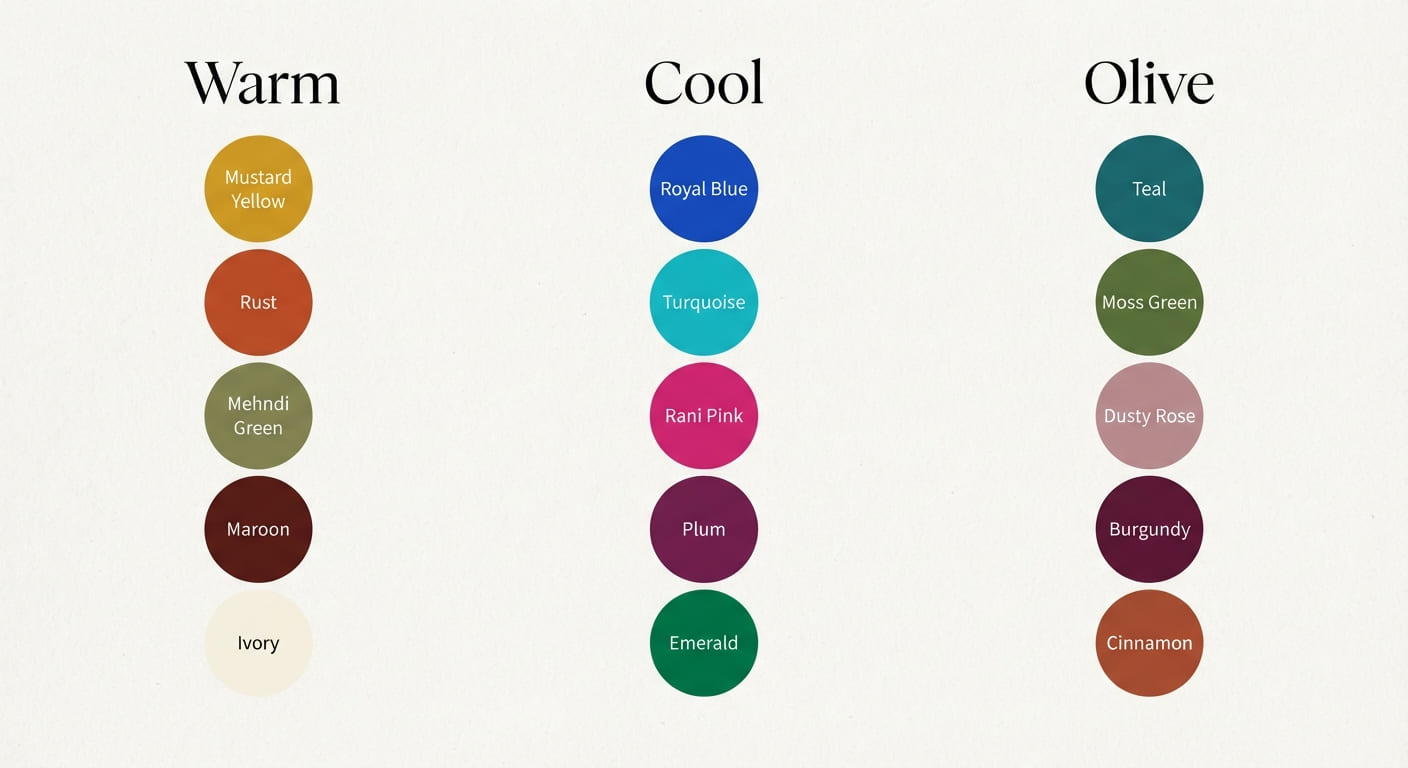
Warm — best: mustard, rust, mehndi green, maroon, ivory. Avoid: icy pastels, stark white.
Cool — best: royal blue, firozi, rani pink, jamun, emerald. Avoid: mustard, warm khaki.
Olive / neutral — best: teal, moss, dusty rose, burgundy, cinnamon. Avoid: yellow-greens, flat beige.
What We See in Our Own Studio
We photograph every collection on real customers, not just on hangers. A few patterns repeat every single season.
Mustard is the most misjudged colour in Pakistan. Customers avoid it on the roll, then love it on the body — because most Pakistani skin is warm-undertoned and mustard is built for it.
Pale nude is the most returned shade. It looks elegant in the studio and disappears in flash photography.
Jewel tones get the fewest exchange requests across every depth of skin we shoot.
Frequently Asked Questions
Can dark skin wear pastels?
Yes — but choose warm pastels with body in them. Peach, buttercream and dusty rose work. Icy mint and baby blue do not.
What colour suits every Pakistani skin tone?
Deep teal comes closest. It sits between warm and cool, so it flatters almost every undertone and every depth.
Is black good for brown skin?
Black is safe but flat on its own. Lift it with gold zari, a bright dupatta or a coloured inner so your face is not competing with a solid block.
Does my undertone change in summer?
No. Your skin gets deeper when you tan, but the undertone underneath stays the same. Your colour family never changes.
How do I check a colour before I buy online?
Open the product photo, hold your phone up under your chin near a window, and look at your jaw in the mirror. If your jawline looks grey, the colour is wrong for you.
Before You Buy
Run any suit through the three layers: undertone, depth, contrast. If it passes all three, buy it. If it fails one, use the neckline rule.
Ready to shop by colour? Browse the Riwayat collection.
A note on colour and confidence: there is no such thing as a skin tone that limits you. Every undertone has a palette that makes it glow. This guide is about matching, not about lightening or hiding anything.
